Top Signs You Need Garage Door Service – Don’t Ignore These
The clearest signs you need garage door service are a door that’s slower than it used to be, a reversing opener, fraying cables, worn rollers, or panels that no longer sit square in the frame. These are mechanical symptoms with a specific cause behind each one, not random quirks to live with. A garage door that takes two seconds longer to open than it did six months ago isn’t just slow: that delay is the opener’s force compensation working overtime to move a door that’s out of balance, and the motor accumulates heat stress on every cycle. If you’d rather not climb a ladder and diagnose it yourself, call (855) 658-5277 and we’ll take a look.
The Balance Test: The First Diagnostic You Should Run
A properly balanced garage door should hold its position when you stop it halfway. If it drifts, the springs have lost tension, and the amount of drift tells you how much. This is the single most useful check you can do, and most homeowners never run it.
Here’s the pass/fail. Disconnect the opener by pulling the release handle, lift the door to about waist height, and let go. A balanced door stays put. If it drops, note how far it travels. A door that drifts a couple of inches and settles is showing early spring fatigue. A door that slides all the way down under its own weight has a spring that’s lost meaningful tension, and the opener is now doing work the spring was designed to do.
That matters because torsion and extension springs carry the weight of the door. When they weaken, the opener motor absorbs the load, and the motor wasn’t built for it. We see this constantly in Lynnwood: a homeowner calls about an opener that “keeps quitting,” and the opener is fine. The springs are the problem. Spring repair is high-stakes work, so if the balance test fails badly, leave the springs alone. Winding torsion springs under tension is genuinely dangerous. For garage door spring repair, keep your hands clear and let a trained technician handle it.
What Fraying Cables Actually Look Like (And When to Stop Using the Door)
Frayed cables are the most under-reported failure we see in Lynnwood, mostly because people don’t know where to look. Cables run from the bottom bracket up to the drum above the door. That’s where you inspect, and the damage progresses in stages.
- Stage one: a few stray wires poking out from the braid near the drum. Cosmetic for now, but it’s the cable telling you it’s aging.
- Stage two: visible flattening or “birdcaging,” where the braid opens up into a loose spiral. This is a same-week repair.
- Stage three: broken strands dangling off the drum, or a kink at the bottom bracket. Stop using the door. A cable under tension that snaps can whip and cause serious injury.
The bottom bracket is the other spot to check. Look for rust staining, a bent bracket, or a cable that’s jumped its groove on the drum. Any of those moves the job into same-day territory. Cables and springs work as a system, so a worn cable usually means the springs deserve a look at the same time. If your inspection turns up stage two or three, that’s the moment to call for garage door repair rather than keep cycling the door.
Roller Wear: The Difference Between Noisy and Dangerous
A squeaky roller is annoying. A roller that’s losing its nylon flange will derail under load, and that’s a different animal entirely. Knowing which one you have saves you from both an unnecessary repair and an avoidable one.
Noisy rollers are usually dry or slightly worn, and a little lubrication quiets them. That’s the harmless kind. The concerning kind shows physical damage. Get a flashlight and look at each roller where it sits in the track. Nylon rollers should be smooth and round. What you’re hunting for:
- Flat spots worn into the roller face, which means it’s binding instead of rolling.
- A cracked or missing nylon flange, which lets the roller ride crooked in the track.
- Steel rollers with worn bearings that wobble when you move the door by hand.
- Any roller that sits visibly off-center in its hinge.
Those four are load-bearing failures waiting to happen. A derailed door can come off the track and drop, and it usually happens at the worst time, like when you’re pulling out for an appointment. Wayne Dalton and Clopay doors use different roller and hinge configurations, which is one reason we keep parts for both on hand instead of guessing at the counter. If you find a cracked flange, don’t run the opener until it’s replaced.
Opener Behavior That’s Telling You Something
Your opener is a diagnostic instrument if you know how to read it. Three behaviors in particular point straight at the underlying problem, and none of them mean “the opener is broken” on their own.
The door reverses without obstruction. The opener’s safety sensors or force limit are triggering. Sometimes it’s a misaligned photo-eye, sometimes it’s a door binding in the track that the opener reads as resistance. The fix depends on which, and it’s worth diagnosing properly rather than cranking up the force setting, which just masks the real issue.
The opener hesitates before moving. A pause before the door starts suggests the motor is straining against a door that’s out of balance or a track that needs attention. That hesitation is the force compensation again, buying time before it moves the load.
The door only opens halfway and stops. That’s usually a travel-limit setting that’s drifted, or a door hitting resistance the opener won’t push past. On older Craftsman units and modern LiftMaster and Chamberlain openers alike, the limits can be reset, but if the door keeps stopping in the same spot, there’s a mechanical cause underneath. Genie and Chamberlain systems each set limits differently, so knowing the brand matters before anyone touches the settings. When opener behavior is the symptom, it’s worth a proper look at garage door opener repair before the motor burns out from fighting the door.
Panel and Frame Alignment: The Gap Method
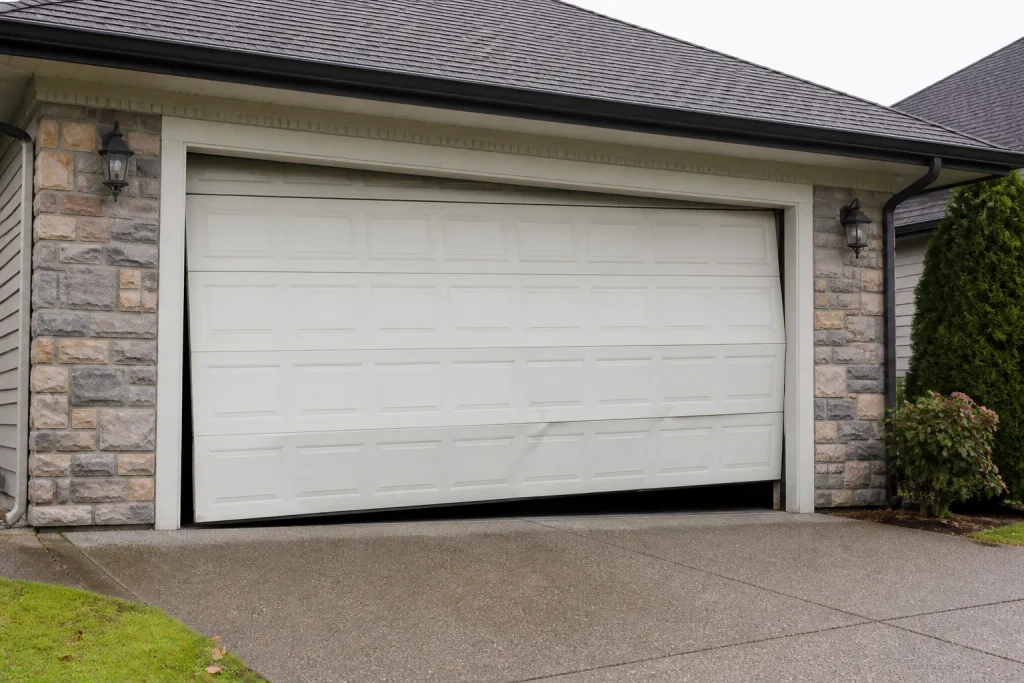
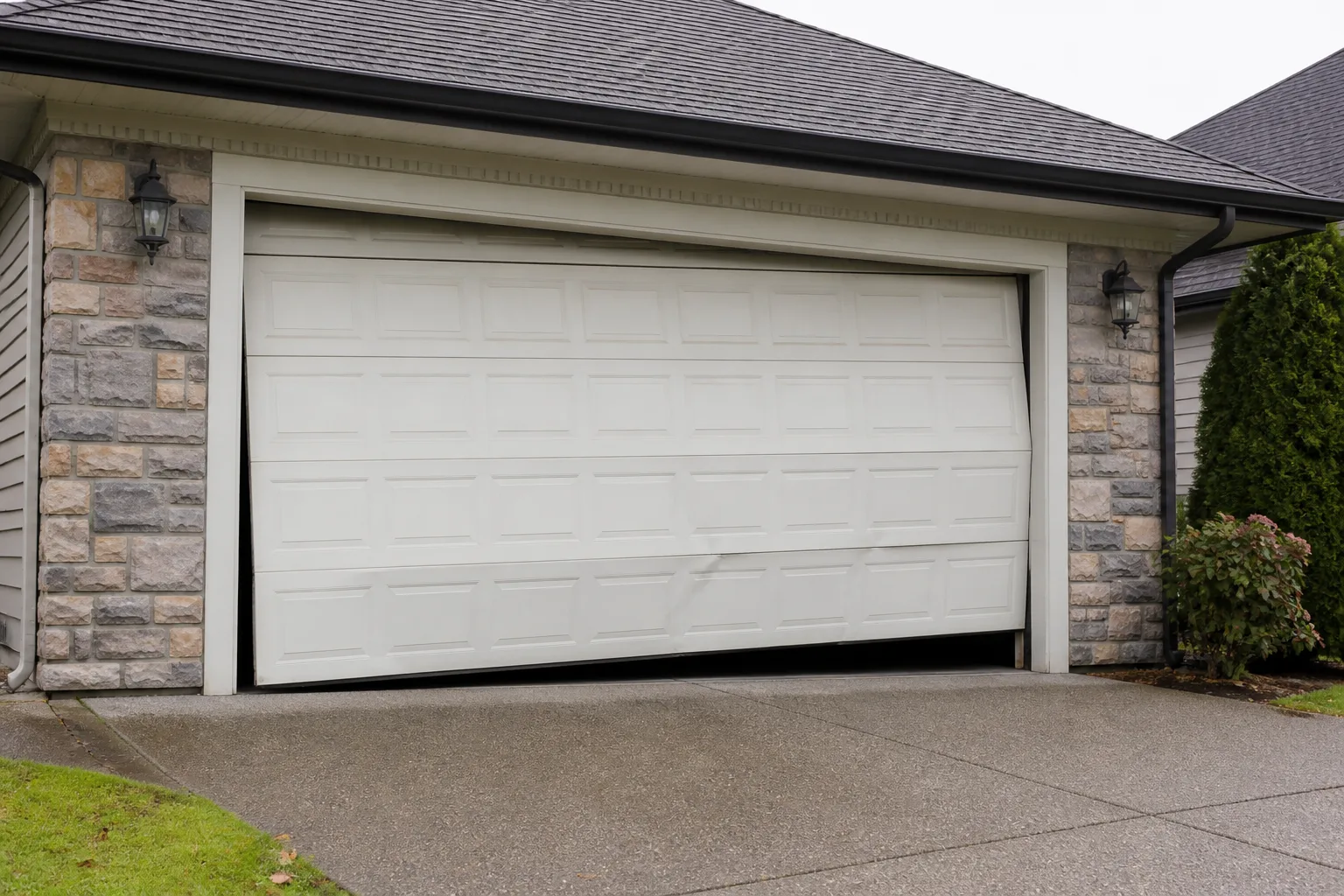
A door that’s out of square wears out every other component faster. You can check alignment with a simple gap measurement. Stand inside the garage, close the door, and look at the gap between the door panels and the vertical frame on each side.
The gap should be even top to bottom and side to side. If one side has a wider gap at the top than the bottom, the door is racked, meaning it’s riding crooked. That usually traces back to a bent track, a loose hinge, or a failing cable on one side pulling unevenly. Run the door up and check whether the panels stay parallel to the frame or drift toward one side as they rise. A door that tracks straight stays square the whole way up.
Misalignment is why we treat a “sticking” door as more than a nuisance. Racked panels put extra load on the rollers, the hinges, and the springs at the same time, so a small alignment problem quietly ages the whole system. Amarr and Clopay panels in particular depend on square tracking to seal properly, and a misaligned door lets weather and pests in along the bottom seal. Catching it early is a cheap fix. Ignoring it isn’t.
When to Call a Pro
You can run the balance test, inspect your cables, and check roller flanges yourself. Stop there. Springs, cables under tension, and anything that has you climbing a ladder to reach the torsion bar are jobs for a trained technician, and the injury risk is real. If you find a broken cable, a door off its track, or a spring that’s clearly failed, don’t keep cycling the opener hoping it sorts itself out. We handle spring repair as its own safety-critical service, not a side job, and our technicians have up to 12 years of experience reading exactly these symptoms. Living in Lynnwood, you’re also dealing with doors that face real seasonal temperature swings, and a door that’s out of balance handles that worse every year. If it’s stuck open or off-track, emergency service is part of what we do.
Related services in Lynnwood: garage door spring repair, garage door opener repair, and full door installation and replacement.
If you’re in Lynnwood and need help, Lynnwood Garage Door Repair Pros offers free estimates and same-day service where the schedule allows. We work on every major brand, from LiftMaster and Chamberlain openers to Clopay, Amarr, Wayne Dalton, and Genie doors, so there’s no guesswork about parts or quirks. Call (855) 658-5277.
The Bottom Line
Most garage door failures announce themselves weeks before they happen. A drift in the balance test, a frayed cable at the drum, a cracked roller flange, an opener that hesitates or reverses, a door that no longer sits square: each one names the component that’s failing and tells you how urgent it is. The pattern to remember is that the opener is usually the messenger, not the culprit. Diagnosing the door correctly is what keeps a small repair from becoming a big one, and it’s why we’d rather tell you a door is worth fixing than push a replacement that doesn’t make sense.
If you’re in Lynnwood and need help, Lynnwood Garage Door Repair Pros offers free estimates – call (855) 658-5277. We’ll quote the price and agree it with you before any work starts, so the number you hear is the number you pay.
Frequently Asked Questions
The earliest signs are a door that’s slower than it used to be, an opener that hesitates or reverses without obstruction, and a door that drifts instead of holding position during the balance test. Any of those means the door is out of balance or a component is wearing, and it’s worth a look before it becomes a breakdown. Call (855) 658-5277 for an exact quote on what it needs – estimates are free.
Your door won’t hold its position when you lift it by hand and let go. If it drifts down instead of staying put, the springs have lost tension, and the opener is absorbing the load. Weakening springs also make the door feel heavy and the opener sound strained. Don’t adjust or replace torsion springs yourself, since they’re under heavy tension. Call (855) 658-5277 and we’ll diagnose it safely.
Not always. A squeaky roller is usually just dry and quiets down with lubrication. Worry when the noise comes with visible physical damage, like a cracked nylon flange, a flat spot on a roller, or a wobbling steel roller with a worn bearing. Those can derail the door under load. If you’re not sure which you have, call (855) 658-5277 for a free estimate.
You can safely run the balance test, inspect your cables and rollers visually, and check panel alignment with a gap measurement. Springs, cables under tension, and torsion work are not DIY jobs, because the stored energy can cause serious injury. For anything beyond a visual check, call (855) 658-5277 – our technicians have up to 12 years of experience and we’ll quote the price before work starts.
Written by the team at Lynnwood Garage Door Repair Pros.
Need Garage Door Help?
Call Lynnwood Garage Door Repair Pros - the local pro we connect you with is licensed and insured, here with fast after-hours help in Lynnwood.
(855) 658-5277